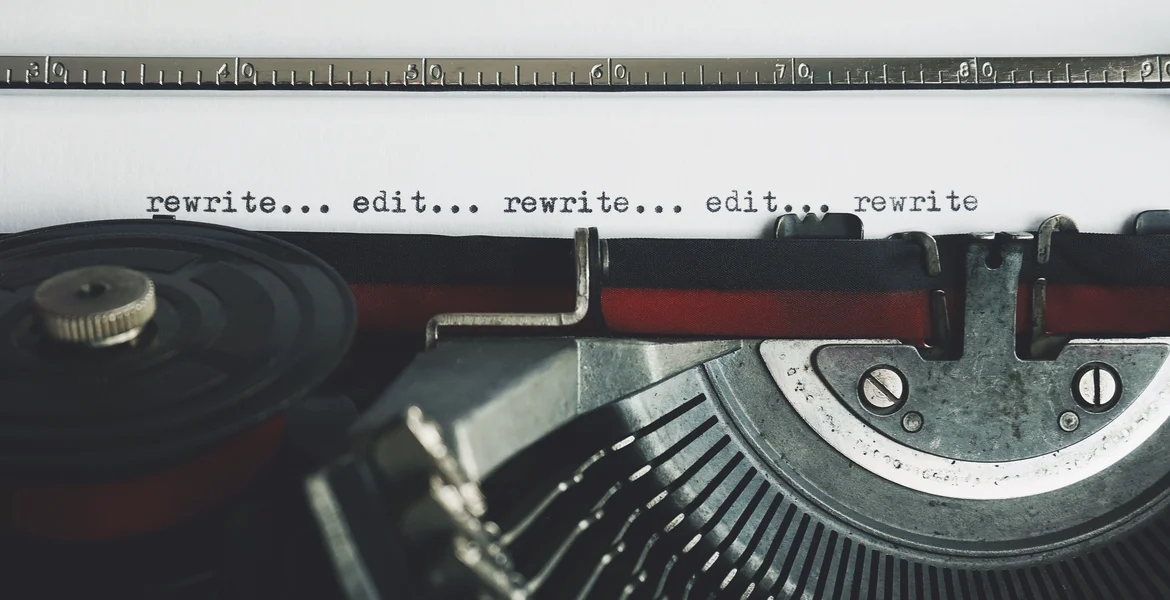
un-editor
White never even agreed with Strunk and White.
White used passive voice. He began sentences with conjunctions. Pronouns floated. Sentences ended on a preposition if that's where they wanted to end. The proscriptions in Elements of Style are aspirational, they describe how writing should behave, another way of saying how it usually doesn't. Every writer has a catalogue of violations they commit by license, by habit, by not frankly not giving a damn. Or just because the sentence came out like that and fixing it would cost more than aherence to a rule.
That's not failure.
AI learned from a rigid and sterile teacher. Not because it was instructed to follow the seminal text on grammar, rather because it trained on work that had already passed by various critical editors, through multiple revisions, and was written for a community where linguisitc conformity was paramount. The distance between how a human really writes and how arbitrary rules say they ought was long edited out of the corpus.
What was selected in: polished prose, published journalism, dry academic texts; all writing that was carefully examined by 'someone'. Someone whose job was to make the written word conform to the median.
AI composes with a bias towards correctness that stealthily flags itself as inhuman to anyone who has spent time reading authentic prose. There is a Stepford Wives quality to its writing, a plastic surgery uncanny valley where the wrongness comes not from deficiency but from over correction.
It feels distinctly Hollywood. Can't name the procedure, sure can feel it, and once you get a feeling for it you can't stop seeing it. Overly manicured speech triggers a primal response: lizard brain rejection before the reader has even finished.
Beautiful faces are symmetric; exceptional beauty features a point of notable asymmetry. A mole. That gap in the teeth. The slightly crooked nose that somehow makes melds the features flawlessly, distinctively, uniquely. Perfect symmetry reads as edited. Asymmetry is the thing you remember.
Plastic surgery chases symmetry and invites us into the uncanny valley. It removes the asymmetry that was doing connective work. AI writing prioritizes correctness and produces the same effect. Dangling participles, floating pronouns, sentences that end somewhere it shouldn't — these are moles. Editing them is the procedure you can always see.
Not badly written, rather correctly written.
You feel it before you can name it ... the same pre-cognitive cognition from accent: a group identified as outsiders form across the valley, well before any specific tell has registered, because the lean is wrong. Exactly the problem with perfectl text. No human could produce it, the very rules invented to perfect were never attainable. Or desirable.
So the prescription is quite the opposite of what every grammar teacher said. Dangle a participle. End on a preposition, a perfectly good place to end on. Let the pronoun float, embrace ambiguity. By license artistic, or happy accidental trangression. Both are distinctly human.
Led me to a tool that runs the author/voice pipeline in reverse. Not to move text toward an accepted standard, instead the un-editor identifies where a draft has over corrected and surfaces violations it should have embraced, organically. Calibrated to this author's specific patterns, learned from a baseline. Never automatically applied. Spotted and offered to the author, who decides what feel right.
The human in the loop is the point. A planned violation is still a violation; an accepted one rings authentic.