darq box as ogrify: the incongruence engine
The tool started as a mistake I liked.
I had fine-tuned a Qwen2.5-1.5B base on a blend of my blog and my conversational corpus, the darqness-scale work, feeding it seed sentences to see how close it landed to my register. It cannot write. Anything past seventy-five words and it forgets itself, loses the thread, starts producing the flat hum of a model that has run out of me to imitate. Under that limit it does something else. I fed it a note about curtido, the Salvadoran cabbage slaw, and it came back with "the texture of that dip reminds me a lot about curried ghee from my country."
Wrong on the facts. I am not from anywhere near ghee.
But the move underneath was right. The reflex to reach for something in the same textural and cultural key and hold it up against the slaw. That reflex was mine even where the destination was not. I read the sentence, felt the wrongness, and the mistake handed me "the ghee we culturally appropriated from a former British colony, which is to say Northern California in the nineties." I could not have gotten there cold. Would never have reached for ghee myself. The model could not have landed California on its own. That construction only exists because a thing trained on my voice was confidently, usefully incorrect, and I was standing there to catch it.
This is not a synonym tool, which preserves your meaning and bores you. Not a draft generator either, the kind that tries to finish your sentences and fails with confidence. It is closer to Ogrify, the old Markov hack that once produced something that might have been written by the lead singer of Skinny Puppy. Ogrify is described in the corpus I fed it, so the darq box got a description of its own ancestor. It knows the register. It does not know the aim. You supply the aim. It supplies the detour. It works by being wrong in the right direction. The only kind of wrong worth anything.
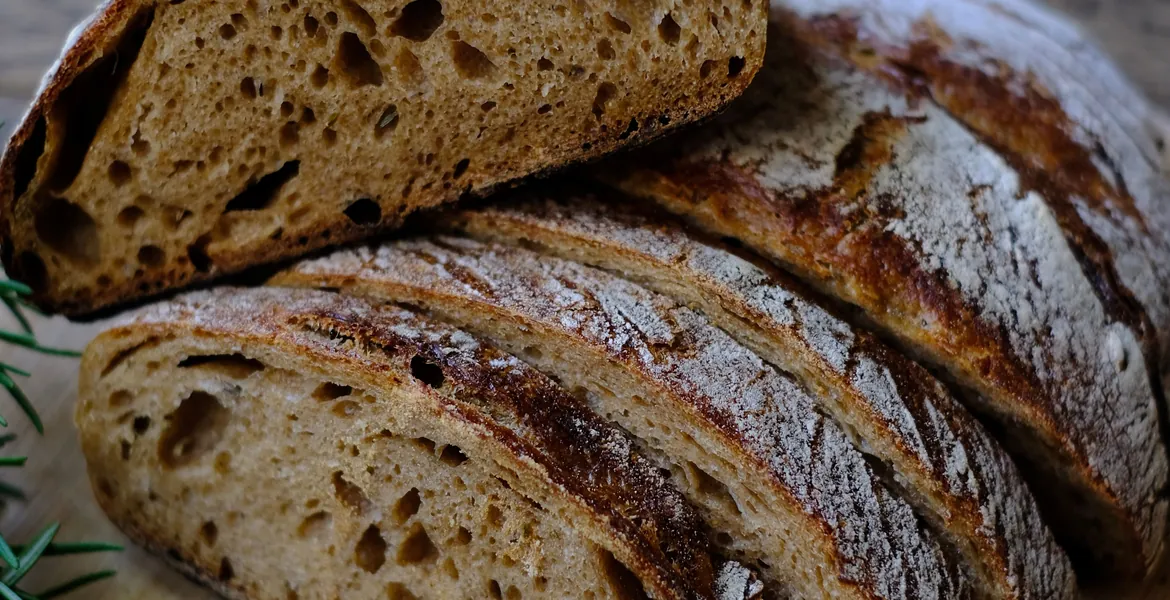
I asked it about the loaf. It said: "Is it finished? Yes or no?"
Yes. Put it in the bread box.